Optical sourcing desk: send host, firmware, port, reach and quantity for compatibility review. Start RFQWhatsApp follow-up
WUHAN SUNFULL Global B2B DeskTECHNICAL REVIEW for prepared BOMsWhatsApp RFQContact UsDocuments

800G QSFP-DD optical sourcing

Match 800G QSFP-DD Transceivers to the Port, Fiber Plant and Peer Optic

Compare 800G QSFP-DD families by host interface, optical lane plan, connector, reach and coding target, then request the exact SKU required for review.

  • Keep QSFP-DD and QSFP112 host requirements separate
  • Choose parallel or duplex fiber architecture before selecting a module
  • Check cage power and airflow with the host specification
  • Capture peer optic, FEC and software details in the RFQ
4verified catalog families
17exact SKU options
6-stepquotation workflow
SKU-leveldocument confirmation

Commercial overview

Eight lanes, several optical architectures, one link that must be specified end to end

An 800G QSFP-DD requirement can point to parallel single-mode, multimode or multiplexed duplex optics. Those options change the connector, fiber count, peer interface and breakout plan. PhotonVerge uses the collection to narrow a buyer's requirement to the exact family and SKU rather than treating every 800G QSFP-shaped module as equivalent. State the host platform, cage type, software, port mode, peer optic, route and quantity so the technical and commercial response can be reviewed against a defined link.

Use this page when the host requirement is specifically QSFP-DD

Good starting point

  • 800G Ethernet or RoCE switch links with an identified QSFP-DD cage
  • projects choosing between parallel and duplex single-mode fiber
  • upgrades where QSFP-DD power, airflow and port policy must be checked
  • BOMs containing an 800G QSFP-DD OEM part number or coding target
Start elsewhere when

  • an OSFP-only host or a platform requiring QSFP112
  • rack-level fixed-cable designs that do not need removable optics
  • a link whose remote endpoint and cabling path have not been identified

Product taxonomy

Filter by optical path, not by 800G alone

The scheme determines connector and lane mapping. The exact reach and standards support must be confirmed on the selected SKU.

DR8

Parallel single-mode option for short data-center links and lane-oriented architectures.

2xDR4

Two four-lane groups for direct or breakout paths where endpoint mapping is explicit.

FR4

Duplex single-mode candidate for reduced fiber count; confirm host and standard support.

2xFR4

Two duplex optical groups for dual-path designs from one QSFP-DD package.

SR8

Parallel multimode option for controlled short-reach fiber plants.

Extended reach

Longer-distance candidates requiring wavelength, loss budget and peer-optic review.

Buyer checklist

What to confirm before comparing 800G QSFP-DD prices

Price comparisons are meaningful only after candidates solve the same physical and host-side requirement.

Cage and host generation

Confirm QSFP-DD rather than a visually similar but electrically different form factor.

Electrical lane mode

Record the host lane rate, port mode and breakout configuration.

Optical architecture

Define DR8, 2xDR4, FR4, 2xFR4 or SR8 before shortlisting.

Connector and polarity

Match MPO or LC, fiber count, polarity and polish to the installed plant.

Reach and margin

Use route loss and operating margin in addition to nominal distance.

Power and airflow

Check cage power class and platform airflow for the exact module.

FEC and peer optic

Document the far-end optic, wavelength plan and FEC expectations.

Identification requirements

Specify coding target, DOM fields, labels and any procurement document needs.

Exact catalog records

Browse 800G QSFP-DD Transceivers

Use product identity, structured specifications and exact SKU records. Search results do not assert live stock or host acceptance.

Showing 4 of 4 product families
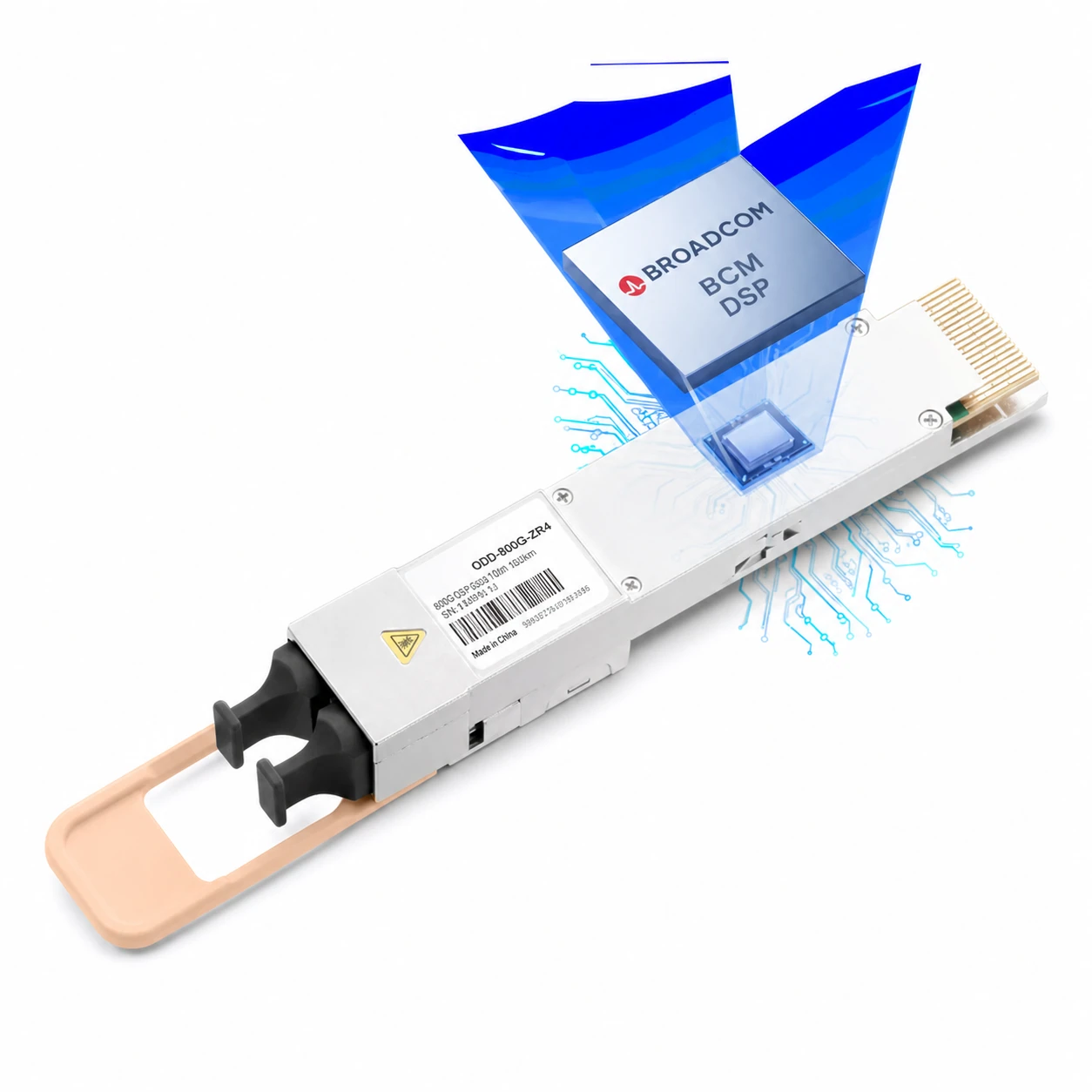
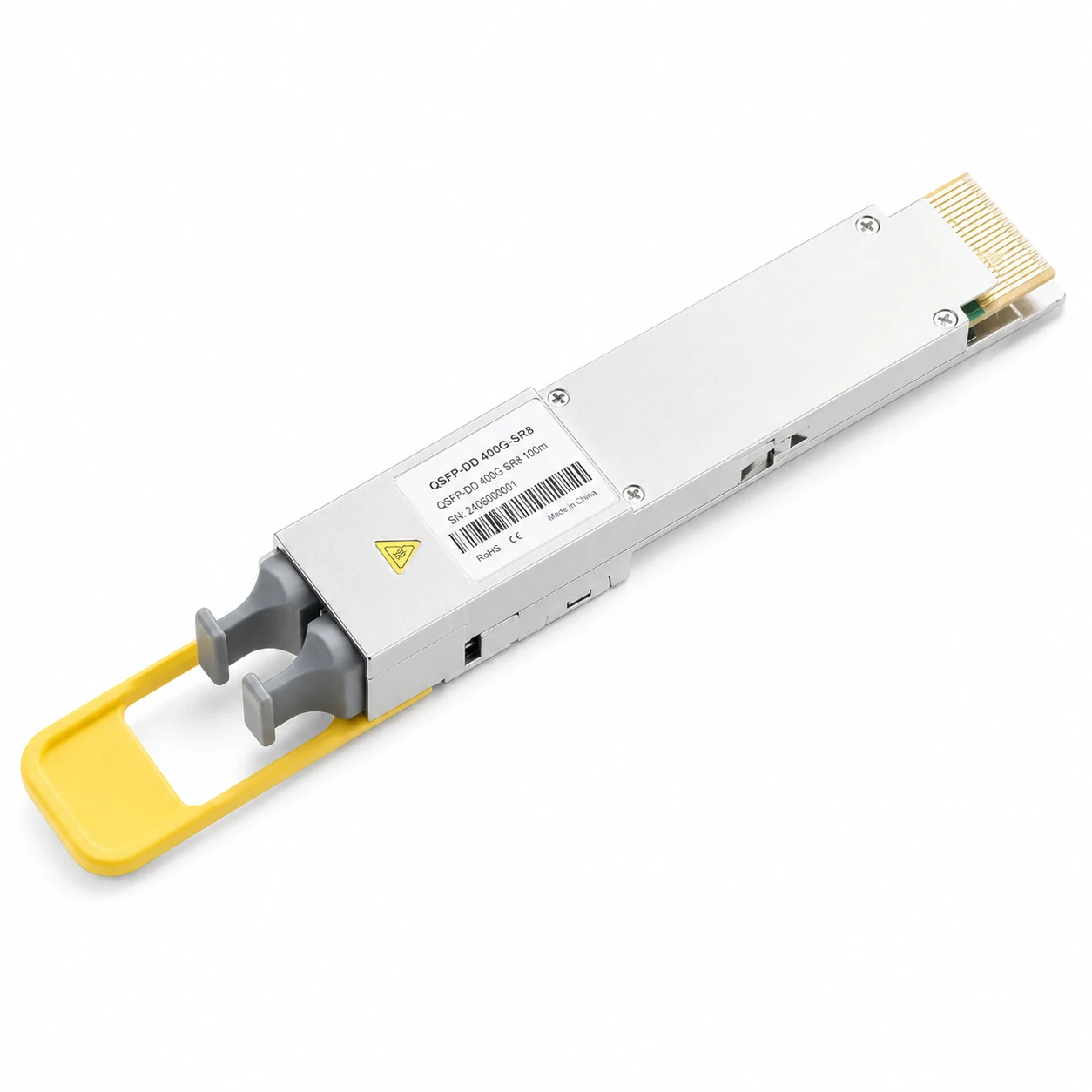
Lossless EthernetCisco QDD-800G-2xSR4 800G QSFP-DD 2xSR4 100m

Cisco QDD-800G-2xSR4 800G QSFP-DD 2xSR4 100m

800G QSFP-DD 2xSR4 100m Transceiver with 4 exact SKU options. Confirm the host, port and firmware before quotation.

4 SKU optionsForm Factor: QSFP-DDDistance: 100mWavelength: 850nm
Lossless EthernetCisco QDD-800G-2xVR4 800G QSFP-DD 2xVR4 50m

Cisco QDD-800G-2xVR4 800G QSFP-DD 2xVR4 50m

800G QSFP-DD 2xVR4 50m Transceiver with 4 exact SKU options. Confirm the host, port and firmware before quotation.

4 SKU optionsForm Factor: QSFP-DDDistance: 50mWavelength: 850nm
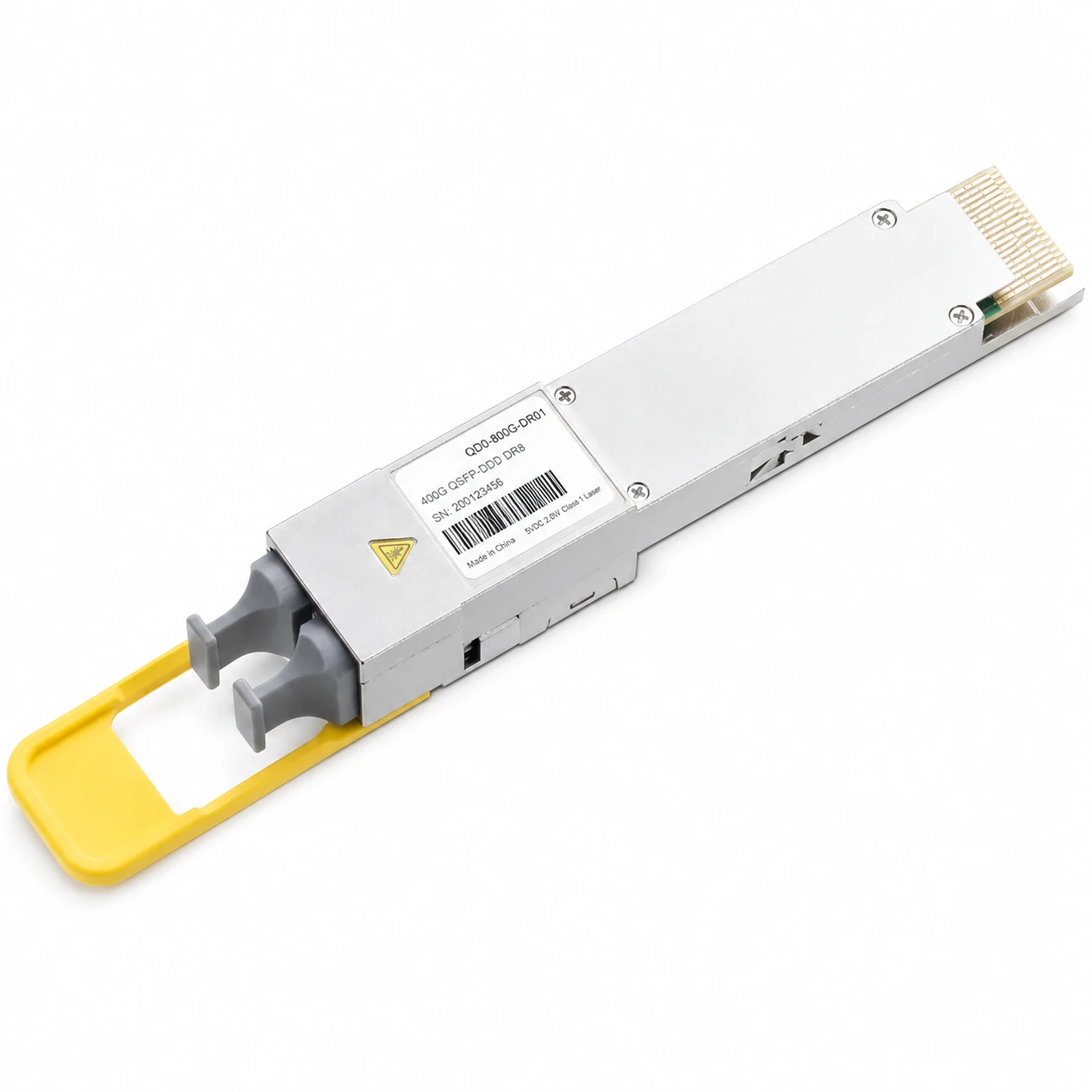
Lossless EthernetNVIDIA/Mellanox QDD-800G-2xDR4 800G Twin-port

NVIDIA/Mellanox QDD-800G-2xDR4 800G Twin-port

800G Twin-port QSFP-DD 2xDR4 500m Transceiver with 5 exact SKU options. Confirm the host, port and firmware before quotation.

5 SKU optionsForm Factor: Twin-port QSFP-DDDistance: 500mWavelength: 1310nm
Lossless Ethernet800G Twin-port QSFP-DD 2xDR4 500m QDD-800LPO-2DR4

800G Twin-port QSFP-DD 2xDR4 500m QDD-800LPO-2DR4

800G Twin-port QSFP-DD 2xDR4 500m Transceiver with 4 exact SKU options. Confirm the host, port and firmware before quotation.

4 SKU optionsForm Factor: Twin-port QSFP-DDDistance: 500mWavelength: 1310nm

4 product families available; page 1 of 1

Decision matrix

Parallel versus duplex-fiber QSFP-DD paths

This matrix frames the buyer decision without replacing the selected SKU datasheet.

DecisionParallel pathDuplex pathWhat changes in the project
ConnectorUsually MPO-basedUsually LC-basedPanels, patching and polarity method
Optical groupsMultiple parallel lanesMultiplexed wavelengths on duplex fiberPeer optic and monitoring expectations
BreakoutOften suited to lane-oriented mappingMay expose separate duplex groupsEndpoint count and patch architecture
Loss controlChannel consistency and connector conditionLink budget and wavelength pathAcceptance measurements and margin
OperationsHigher fiber-count inspection disciplineDuplex route documentationSpares and troubleshooting procedure

Engineering boundary

Confirm QSFP-DD host acceptance and optical interoperability separately

A correct package and vendor code do not prove that a host will accept the module or that it will interoperate with the far-end optic. Host policy, software, power class, port mode and monitoring behavior affect acceptance. Optical scheme, wavelength plan, connector and FEC affect the link. Both checks should be recorded before sample approval.

  • Host and line-card model
  • Network OS and release
  • QSFP-DD cage power and port mode
  • Peer optic and remote platform
  • Fiber interface, distance and estimated loss
  • FEC, DOM, coding and labeling requirements

Application planning

800G QSFP-DD application paths

Use the project topology to decide which family deserves detailed review.

Cloud switch upgrades

Port migrations that require a documented relationship between old fiber plant and new optics.

Storage and data paths

High-throughput links where route margin and operational spares should be planned together.

Shortlist the link before requesting price

Share both endpoints, the physical path and quantity so the quotation can identify an exact SKU and unresolved risks.

Prepare a technical RFQ

Supply coordination

A reviewable 800G QSFP-DD sourcing workflow

Each step removes an ambiguity that would otherwise return during sample testing.

1. Identify both ports

Record the local and remote platform, interface and configured mode.

2. Select the optical path

Choose the scheme, connector, fiber type and reach as one decision.

3. Confirm host constraints

Check software, power class, airflow, FEC and coding target.

4. Resolve the SKU

Return the exact candidate and available technical document scope.

5. Approve a sample plan

Define traffic, duration, counters and pass criteria in the real host.

6. Quote the project

Confirm quantity, delivery address, schedule, shipping and commercial terms.

Buyer validation

Build approval around item-level evidence

The evidence set depends on the exact SKU and is confirmed during review, not inferred from the collection heading.

Requestable evidence

Exact family, SKU and coding target

Requestable evidence

Available specification and mechanical data

Requestable evidence

Host and peer-end compatibility questions

Requestable evidence

Sample test plan and buyer-owned result

Requestable evidence

Labeling and traceability requirements

Requestable evidence

Written warranty and RMA terms

Technical resources

Continue the engineering review

Use the relevant guide to resolve a specific decision; product-specific evidence is confirmed for the quoted SKU.

Buyer questions

Frequently asked questions about 800G QSFP-DD Transceivers

Is an 800G QSFP-DD module the same as an 800G QSFP112 module?

No. The shells may appear related, but the host electrical interface and platform support can differ. A buyer should use the exact form factor named in the switch or line-card documentation and confirm the configured lane mode. Do not place a family in this collection merely because its title contains QSFP and 800G.

Which is better for 800G QSFP-DD, DR8 or FR4?

Neither is universally better. DR8 is a parallel optical architecture and FR4 uses multiplexed wavelengths on duplex fiber. The choice depends on the host, peer optic, connector, available fiber count, route length, loss budget, breakout requirement and operating practice. Compare total link architecture and migration work, not only module price.

Can an 800G QSFP-DD link use an existing MPO plant?

Possibly, when the selected optical scheme, connector, fiber count, polarity and loss budget match that plant. Inspect the connector condition and document every cassette, adapter and patch segment. An existing MPO route should not be approved solely because it has enough fibers; lane mapping and end-face type must also align.

What should be included in a QSFP-DD compatibility request?

Include host and line-card models, network OS release, configured speed and FEC, cage power information if available, OEM part number or coding target, peer optic, fiber interface, route length, quantity and destination. State any DOM, alarm, labeling, warranty or report requirements before the exact SKU is quoted.

Should quantity deployment begin after a module is recognized by the host?

Recognition is only an initial check. Run representative traffic, inspect diagnostic data and temperature, record FEC counters, verify the peer link and repeat insertion or restart steps that matter operationally. Approval should reference the exact sample SKU and the frozen host software configuration so a later delivery can be compared against the same baseline.

Procurement guide

A practical 800G QSFP-DD buying sequence

Prove the cage and lane mode

Start with the host documentation and configured interface. QSFP-DD must not be inferred from a product photo or a generic QSFP label. Record whether the application is native 800G or a breakout and identify the remote endpoint.

Choose fiber architecture deliberately

Parallel and duplex schemes create different requirements for connectors, fiber count, panels and peer optics. A lower module price can be outweighed by a plant conversion or extra operational complexity, so compare the installed path before pricing candidates.

Review power and host policy

Check the module power class, cage airflow, network OS policy, coding target and monitoring needs. Recognition, stable operation and optical interoperability are distinct acceptance stages and should be recorded separately.

Tie the purchase to a repeatable sample result

Define traffic, duration, counters, temperature observations and pass criteria. Retain the exact SKU and configuration used. Commercial approval can then cover quantity, destination, schedule, warranty and document scope without reopening the technical assumptions.

Structured B2B request

Request an 800G QSFP-DD technical shortlist

Provide both endpoints, software, port mode, FEC, optical path, connector, distance, quantity and destination so the candidate can be narrowed to an exact SKU.

No live-stock, lead-time or compatibility commitment is inferred from this page. The selected SKU and commercial terms are confirmed in the written offer.

TopRFQWA