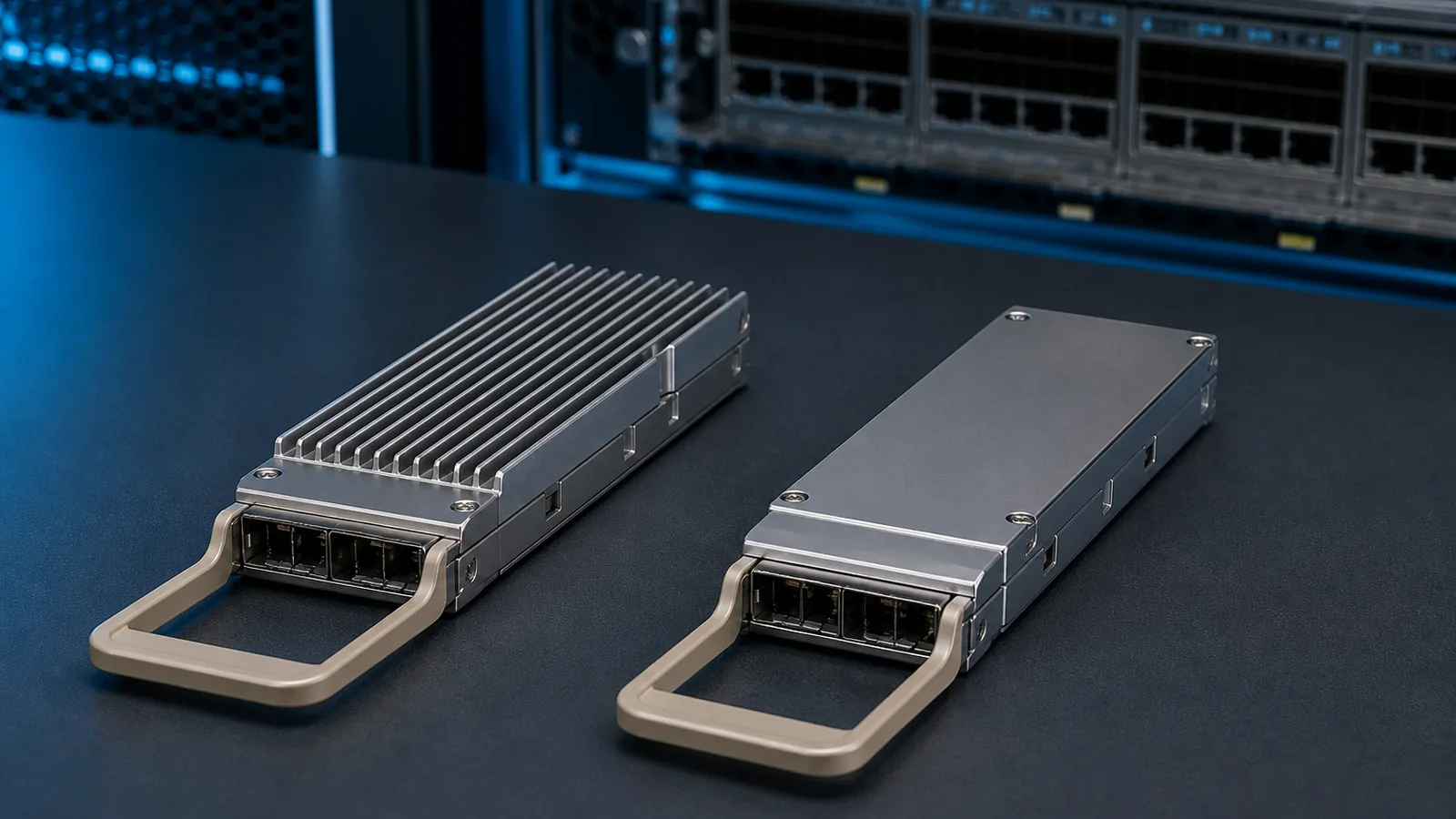
OSFP Finned Top vs Flat Top: Matching IHS and RHS Modules to the Correct Host
Learn how to distinguish OSFP integrated-heat-sink and riding-heat-sink shells, map them to NVIDIA switches and adapters, and prevent costly BOM mismatches.
Read guide >Guides, comparison pages and technical notes for engineering buyers.
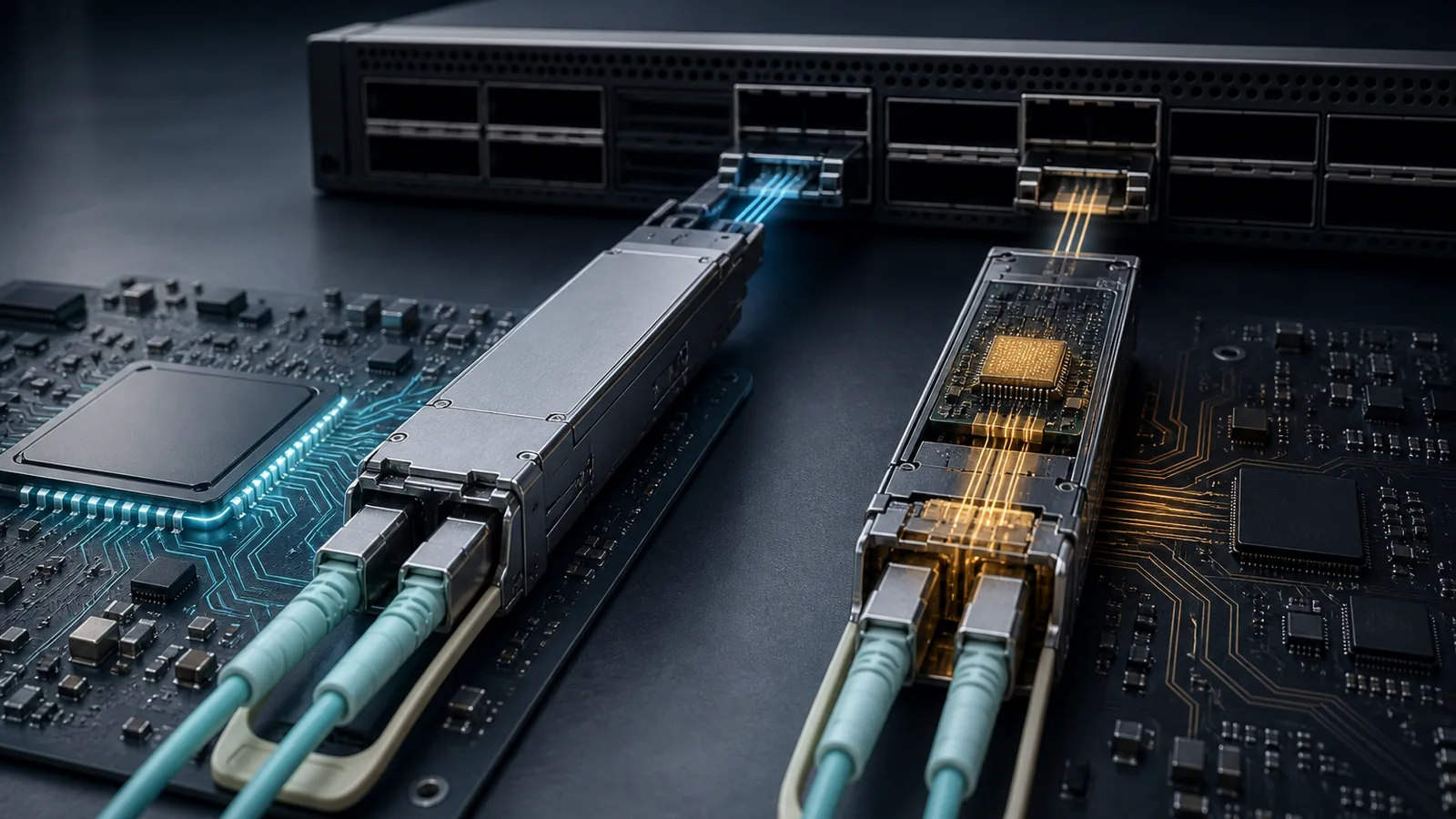
Learn how to distinguish OSFP integrated-heat-sink and riding-heat-sink shells, map them to NVIDIA switches and adapters, and prevent costly BOM mismatches.
Read guide >
Compare 800G LPO and DSP-based pluggable optics by host support, signal margin, power, management, testing and sourcing risk before approving a deployment.
Read guide >
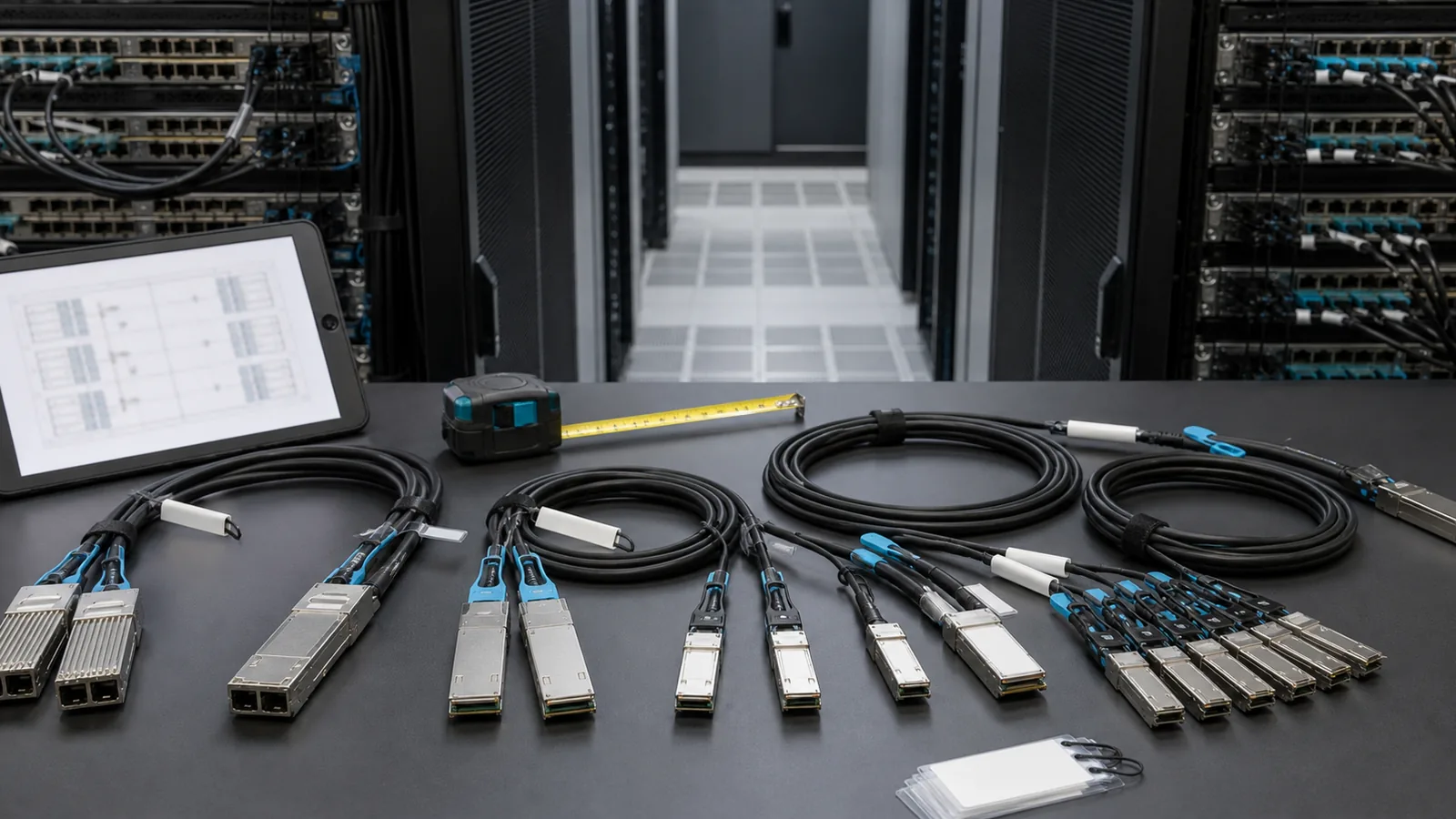
Build an NDR cable BOM from a controlled port map, with exact endpoints, lane modes, connector forms, routes, branch labels and evidence gates.
Read guide >Compare package choice, thermal constraints, host platform readiness and buying risks for 800G links.
Understand where FR4 and LR4 fit, which proof is required, and how to avoid overbuying.
A practical checklist for host model, firmware, port profile, FEC, DOM/DDM and test status.
Explain optical power, receiver sensitivity, insertion loss and environmental headroom.
How polarity, cleaning, inspection and loss budget affect parallel optical links.
Choose optical scheme by reach, connector, fiber plant and evidence required for quotation.
Compare cable length, power, airflow, bend radius, EEPROM and serviceability.
What buyers should confirm before approving high-speed QSFP-DD modules.
Compare fixed 400G/800G AOCs with separable transceivers and fiber by route, serviceability, spares, breakout and upgrade constraints.
Compare direct-detect client optics, OIF 400ZR and OpenZR+ by route, line-system conditions, host support, operations and acceptance evidence.
Compare 800G parallel and dual-engine optical architectures by lane map, connector, fiber count, reach, breakout and acceptance evidence.
Compare passive, linear-active and DSP-based copper cables by reach, power, host dependence, diagnostics and validation evidence.
Interpret pre-FEC BER, corrected and uncorrectable codewords, lane trends and link events using a controlled diagnostic workflow.
Separate useful validation data from incomplete screenshots or generic marketing documents.
A step-by-step plan for sample sourcing, test matrix, firmware record and acceptance criteria.
A practical triage path for link flaps, high BER, temperature alarms and suspected incompatibility.
Evidence policy
This expanded source library does not republish third-party articles as SUNFULL customer cases. A case study is published only after the project owner, supply scope, authorship, media rights and measurable outcomes have been verified.
B2B inquiry desk
Use the message field for part number, host model, firmware, reach, quantity, destination and required documents.